Sabbath Devotional: May We Never Have Less
Updated: Jun 17

Every March, my husband and I attend a St Patrick’s Day breakfast in Boston. The event is social and political theater — imagine the world depicted in every stereotypical Boston film or TV show, and you would not be far off. The room is crowded, the accents are thick, the chatter is loud, the auction is raucous and the jokes roll out. Typically, governors, mayors, members of Congress and countless local and state politicians all sit cheek by jowl in a very small and crowded space. Approximately 3 million speeches are given, but every single one (even from the most hardened pol) references the Christian obligation to care for those in need.
The breakfast is held in the basement of an enormous Cathedral located in Dorchester, and it is the main fundraiser for a food pantry that serves a community of significant need. The neighborhood has always been a rough one, and many of the people in the room are from here, rising out of poverty to now be in a position to give. They have not forgotten where they came from, nor are they willing to leave behind those who are still there.
In spite of that, the last five years have been difficult for the pantry and they have struggled to find the resources to meet rising demand. A pandemic, inflation, rising unemployment, benefits reductions and fear and uncertainty among immigrant populations have all increased the demand for food and necessities, outstripping the church’s ability to provide them.
That is why we are in the room. My husband has professional relationships with the organizers and was able to connect a need with a resource. Because of this, at various points over the last few years the Church of Jesus Christ of Latter-day Saints has made generous and significant donations to the pantry in an attempt to help bridge the gap and keep services flowing to hungry families and children. It has been an extraordinarily welcome and critical addition to their resources. But it has also had an outsize impact on how the Church is viewed by many of these same political leaders. They speak openly and respectfully of our willingness to give to a community where we have almost no presence and are not helping our “own.” It has truly been a game changer for how we are perceived.
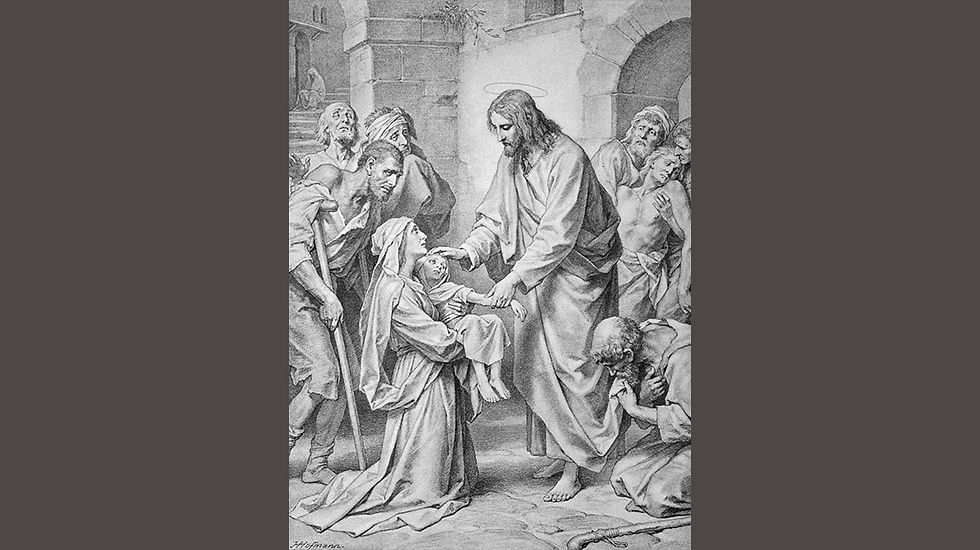
As members of the church, we frequently refer to the “covenant path” as something reductive. We are on the path when we formally make covenants and then regularly put ourselves in situations where they can be renewed (taking the sacrament and attending the temple.) We assume that this aspect of our worship will be what stands out to others. But this year as we read the Old Testament, I hope that we are reminded that the Lord’s call to the ancient Israelites to live in a covenant relationship with him included not only a commitment to love God, but also a requirement that we “love thy neighbour as thyself” (Leviticus 19:18). Over and over again prophets like Isaiah and Jeremiah reminded the people of Israel that their relationship to the poor was a key signifier of their covenant commitments.
Every year, without fail, at some point in the breakfast someone offers the traditional Irish blessing: “may we never have less.” It is greeted with great enthusiasm and delights my soul every time. The blessing is an acknowledgement of abundance — a recognition that in the room at that moment, there is enough friendship, food and happiness to go around. At the same time, it recognizes that abundance is fragile and maintaining it is a balance between our efforts and those of God.
This week I am grateful for the generous and determined service on behalf of the poor that I have the privilege of seeing offered by people of other faiths. It has renewed my commitment to be freer
with what I have, and to manifest my covenant relationship with the Lord by seeing and caring for those who struggle.
. . . . . . . .
Jennifer Walker Thomas is a co-executive director at Mormon Women for Ethical Government.