Sabbath Devotional: This Little Light of Mine

Our recent Primary program featured kids waving their arms to the jaunty new hymn: “This little light of mine — I’m gonna let it shine!” As the darkness grows this time of year, I love that we are celebrating the birth of the Light of the world. So many festivals of light bring us joy and comfort around the globe, such as Diwali, Hanukkah, and Christmas.
One of my close friends has a daily “light routine” — morning and evening walks to adjust circadian rhythms, and a light therapy machine to help with seasonal depression. While I’m no physics expert, I know that light is a superpower. It heals; it is food energy for plants; it is fire; it exerts pressure causing asteroids to spin; it is both a particle and a wave. Light has vibrations, and radiance; it reveals, burns, cures, illuminates, wakes, feeds, cheers, clarifies, explains, warms, promises, gives color, is used for fiberoptics communication; there is ultraviolet light: photography, fluorescent dyes in biochemistry and forensics; light is used for air purification and sterilization, red and blue light treats skin conditions. It guides, welcomes, heralds dawn, its presence illuminates, it highlights, instructs, contrasts, details, memorializes in a flash, soothes, comforts, mesmerizes, celebrates, facilitates, sanctifies. I myself have benefited from light’s unusual modern miracles: jaundice therapy for two of my children, and my own laser eye surgery. Amazing.
Of course, then, light is associated with the divine. “That which is of God is light; and he that receiveth light, and continueth in God, receiveth more light; and that light groweth brighter and brighter until the perfect day” (D&C 50:24).
From the very beginning of the Bible, light is critical to life on earth. “Let there be light” is Deity’s first priority in Genesis. And then, in beautiful symmetry, the Bible concludes with the fulfillment that “the [heavenly] city had no need of the sun, neither of the moon, to shine in it: for the glory of God did lighten it, and the Lamb is the light thereof” (Rev. 21:23). In the heavenly city, “there shall be no night there; and they need no candle, neither light of the sun; for the Lord God giveth them light: and they shall reign for ever and ever" (Rev. 22:5). The Bible starts with God bringing light to the world, and ends with the eternal world lit only by heavenly power.
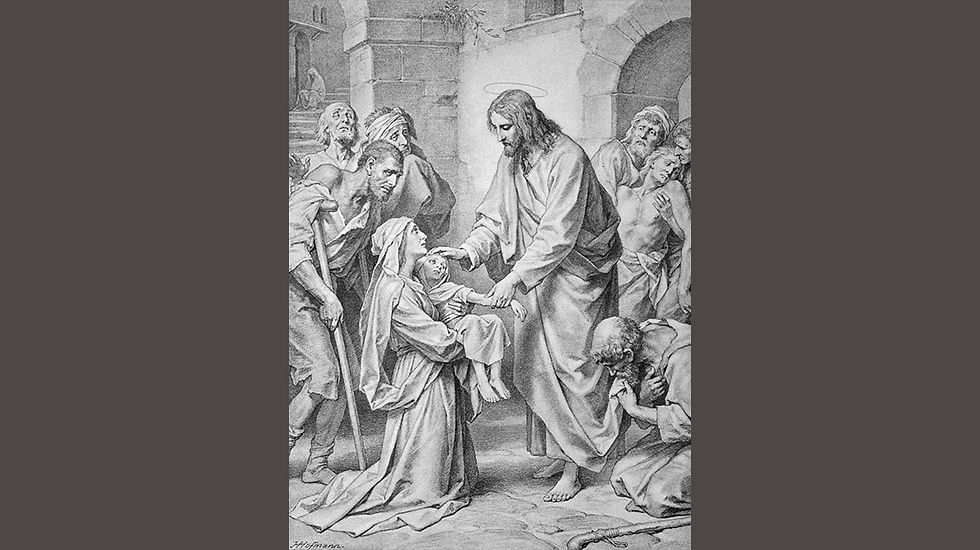
Both literal and symbolic light are particularly central in our understanding of Jesus Christ. A new star was the symbol of Christ’s birth, as well as a day and night with no darkness in the 3 Nephi account. Light is the perfect accompaniment for his arrival to earth. Christ also embodied light in the Old Testament and the Book of Mormon stories. The Lord led the Israelites by fire at night and appeared to the brother of Jared after turning stones to light.
Isaiah and the Psalmist give us the profound poetic concept of Jesus being the Star Shepherd who guides heavenly lights as well as human lives:
”Lift up your eyes and look to the heavens: who created all these?
He who brings out the starry host one by one and calls forth each of them by name.
Because of his great power and mighty strength, not one of them is missing” (Isaiah 40:26)
“He telleth the number of the stars; he calleth them all by their names” (Psalm 147:4)
Restoration scripture further explains that He is: “the light and the Redeemer of the world; the Spirit of truth, who came into the world, because the world was made by him, and in him was the life of men and the light of men” (D&C 93:9-10) and that “[Christ] is the light and the life of the world; yea, a light that is endless, that can never be darkened; yea, and also a life which is endless, that there can be no more death” (Mosiah 16:9).
During his mortal life, Jesus celebrated Hanukkah, the feast of dedication and festival of lights (John 10:22-39). While the holiday was not big in America until the twentieth century, I recently noticed a fun cosmic coincidence: Joseph Smith was born on the final night of Hanukkah (December 23, 1805) to a mother whose name (Lucy) means light. In a lovely connection with the Hanukkah miracle of enduring temple light, Joseph brought new light (and temple holiness) to the world.
When you enter a temple’s celestial room, the chandelier draws your eye heavenward with light. This echoes the presence of the standing five-foot tall menorah in the early Israelite temple, which may have symbolized the feminine tree of life, as well as Jesus himself. As the menorah light miraculously stayed lit longer than was physically possible for Hanukkah, so we too can be sustained one more day by the light of the Lord. Elder Bednar said, “In every season of our lives, in all of the circumstances we may encounter, and in each challenge we may face, Jesus Christ is the light that dispels fear, provides assurance and direction, and engenders enduring peace and joy. Many of our memorable and enduring Christmas traditions include different kinds of lights — lights on trees, lights in and on our homes, candles on our tables. May the beautiful lights of every holiday season remind us of Him who is the source of all light.”
What is your daily “light routine”? Let’s up the wattage so divine light can shine into the dark corners of our souls and on the problems of our world — to illuminate, to heal, to cleanse and purify. We can truly rejoice in this darkest season of the year, just as the Nephites did, awaiting that promised day and night of no darkness. I look forward to the “harvest of light” promised the righteous in Psalm 97:11. The hymns of this season remind us:
Light and life to all he brings
He will bring us goodness and light
Son of God, love’s pure light
Guide us to that perfect light.
Let’s light the world to honor the Light of the world, and let it shine, let it shine, let it shine.
Anita Wells is the faithful root senior director at Mormon Women for Ethical Government.