Sabbath Devotional: In His Name

My husband teaches theater at the local high school. This year, he ambitiously directed Les Misérables. I say ambitiously because of the difficult material, but more especially because he has a limited talent pool — there are only 140 kids in the entire student body.
On opening night last week, tears came to my eyes before the first “Look down” was sung. I felt the overwhelming burden of living in a mortal world filled with injustice and cruelty. As the opening scenes progressed, I felt the emotion of both the era of 19th Century France and the era of 21st Century America. As part of my job at MWEG, I am fully immersed in the news of our day, and it is a lot. At that moment, the weight of it all hit me.
In the musical, Inspector Javert, believing that people cannot change, relentlessly pursues his interpretation of justice. He has governmental authority and claims moral authority.
On the other hand, a generous bishop helps the convicted criminal Jean Valjean to see beyond the limitations of his past. Valjean chooses to seek redemption by creating a life of decency and mercy. To the best of his ability, he cares for the downtrodden and forgotten. For a time, he serves as mayor and has governmental authority. He doesn’t claim moral authority but simply does what he can with what he has.
Both characters are convinced that they are doing what Christ would have them do.
Later in the play, tables have turned and Inspector Javert’s life is in the hands of Jean Valjean. Javert expects Valjean to take revenge. But Valjean is sincere in his conviction and commitment to mercy. He tells Javert, “There's nothing that I blame you for/ You've done your duty, nothing more.” Valjean has chosen to see divinity not only in the oppressed, but in the oppressor. Because he saw Javert as a fellow human being, he was able to let go of the natural tendency to hate and the desire for vengeance. This moment, as much as any in the play, reveals the depth of Valjean’s conversion.
At baptism we covenanted to take Christ’s name upon us. We renew this covenant each Sabbath day. During the sacrament ordinance, we aren’t supposed to be thinking about how others measure up to our own measures of discipleship. The time is to be used in self-reflection. I believe Valjean’s character was able to become truly great because he was concentrating on what was in his own heart instead of others’. With that in mind, please consider these questions introspectively:
How am I using His name?
Do I want justice at the expense of allowing people to change? Do I allow people to grow? Do I forgive?
Do I see humanity in those who are suffering? Do I see humanity in those who create suffering?
In our day, there is suffering, pain, and injustice. Many are lacking in mercy. And some in power claim to be acting in Christ’s name.
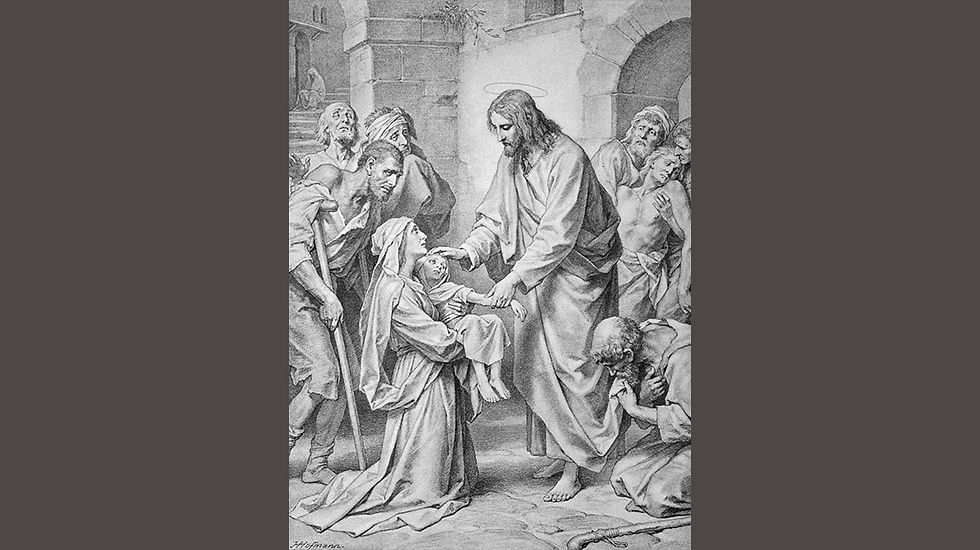
Jesus Christ is powerful. But His power looks different from worldly power. His power is found in virtue, in peace, in forgiveness, in mercy, in true justice (not vengeance), and in love. We act in His name and find His power when we also embrace these characteristics in our thoughts toward and treatment of all of the children of God.
Megan Rawlins Woods is the nonpartisan root senior director at Mormon Women for Ethical Government.